
In volatile markets, small and medium-sized enterprises (SMEs) often grapple with cash flow disruptions that can stall growth. Invoice financing, a lifeline for many, traditionally comes burdened by steep fees and sluggish approvals. RWA-backed stablecoin lines of credit change this dynamic, offering SMEs swift access to capital through tokenized real-world assets. Platforms like Smestablescredit. com pioneer this space, blending blockchain efficiency with the stability of real-world asset backing to deliver SME invoice financing that matches the pace of modern business.
Consider the landscape: global trade tensions and fluctuating commodity prices amplify uncertainty. SMEs, which form the backbone of economies, wait days for funds tied up in unpaid invoices. This friction not only erodes margins but also hampers opportunities in fast-moving sectors like manufacturing and services. Yet, a shift toward stablecoin lines of credit for SMEs powered by real-world assets (RWAs) unlocks liquidity without the volatility plaguing unbacked crypto.
Traditional Invoice Financing's Hidden Costs Exposed
Conventional methods demand collateral scrutiny and paperwork marathons, pushing annualized fees to 12-20%. Processing stretches to 3-5 days, during which opportunities evaporate. Banks prioritize larger clients, leaving SMEs underserved. Data underscores the gap: tokenized private credit has surged to $14 billion, dwarfing other RWA segments, as reported by RedStone. This momentum signals investor appetite for reliable yields amid economic swings.
From my vantage in portfolio management, I've seen how these delays compound in volatile environments. A manufacturing SME might lose a bulk order because funds arrive post-deadline. RWA backed credit for small businesses sidesteps this by digitizing invoices into blockchain tokens, instantly verifiable and tradable.
Traditional vs RWA-Backed Invoice Financing
| Aspect | Traditional | RWA-Backed |
|---|---|---|
| Annualized Cost | 12-20% | ~12% |
| Processing Time | 3-5 days | 1-2 hours |
| Yield for Investors | Variable | Predictable 12% |
| Collateral | Physical assets | Tokenized invoices |
Tokenization: Bridging Real-World Invoices to On-Chain Stability
At its core, RWA tokenization converts invoice rights into digital tokens on blockchain, backed by stablecoins pegged to assets like cash at BNY Mellon or Société Générale. SMEs issue these tokens at a discount, say 2% for 60 days, netting funds in 1-2 hours. Investors claim 12% annualized yields, uncorrelated to crypto gyrations.
Centrifuge stands out, with a $63 million market cap and 574 million circulating CFG tokens, channeling RWA tokenization into SME finance. Their pools transform accounts receivable into DeFi lending collateral, as $21 billion in RWAs reshape on-chain lending. This isn't hype; it's prudent innovation. In my hybrid analysis, blending macro trends like rising private credit with technical blockchain signals reveals a resilient model for blockchain invoice financing for SMEs.

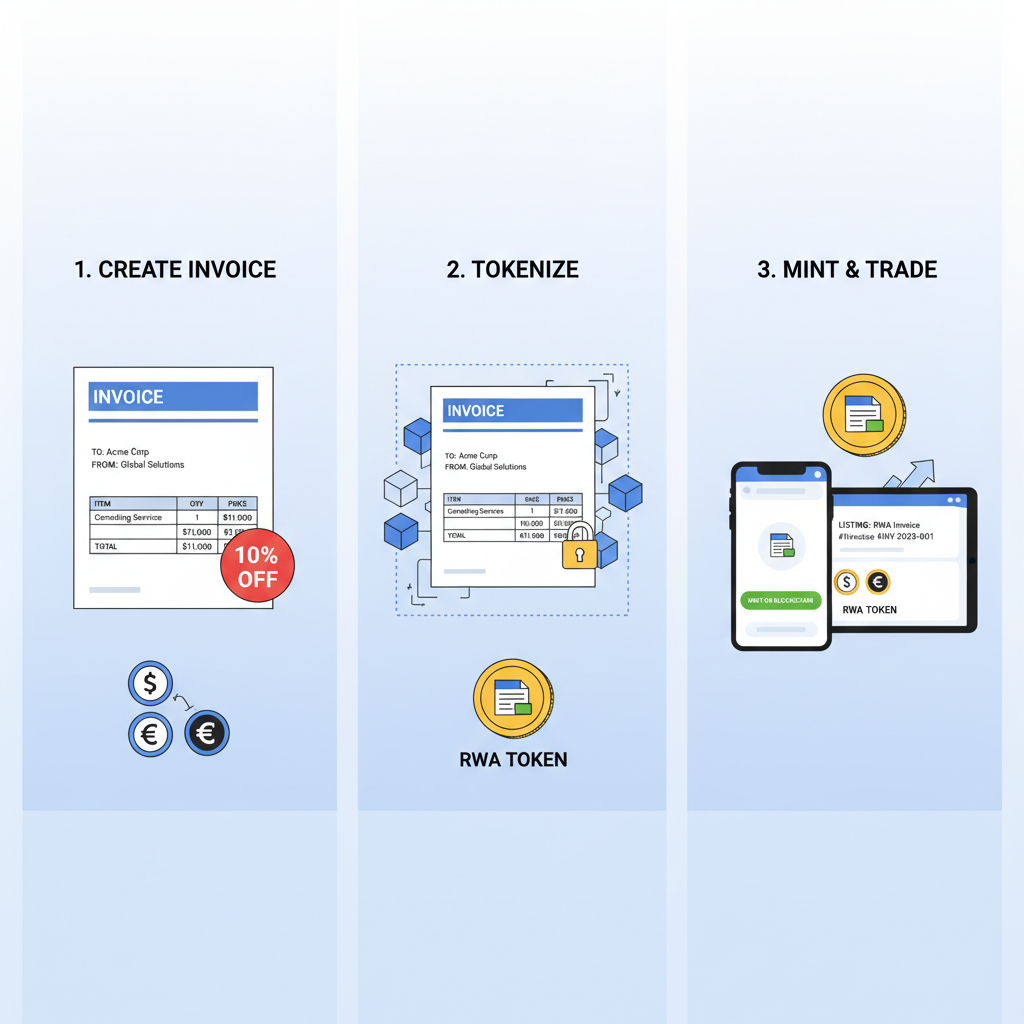
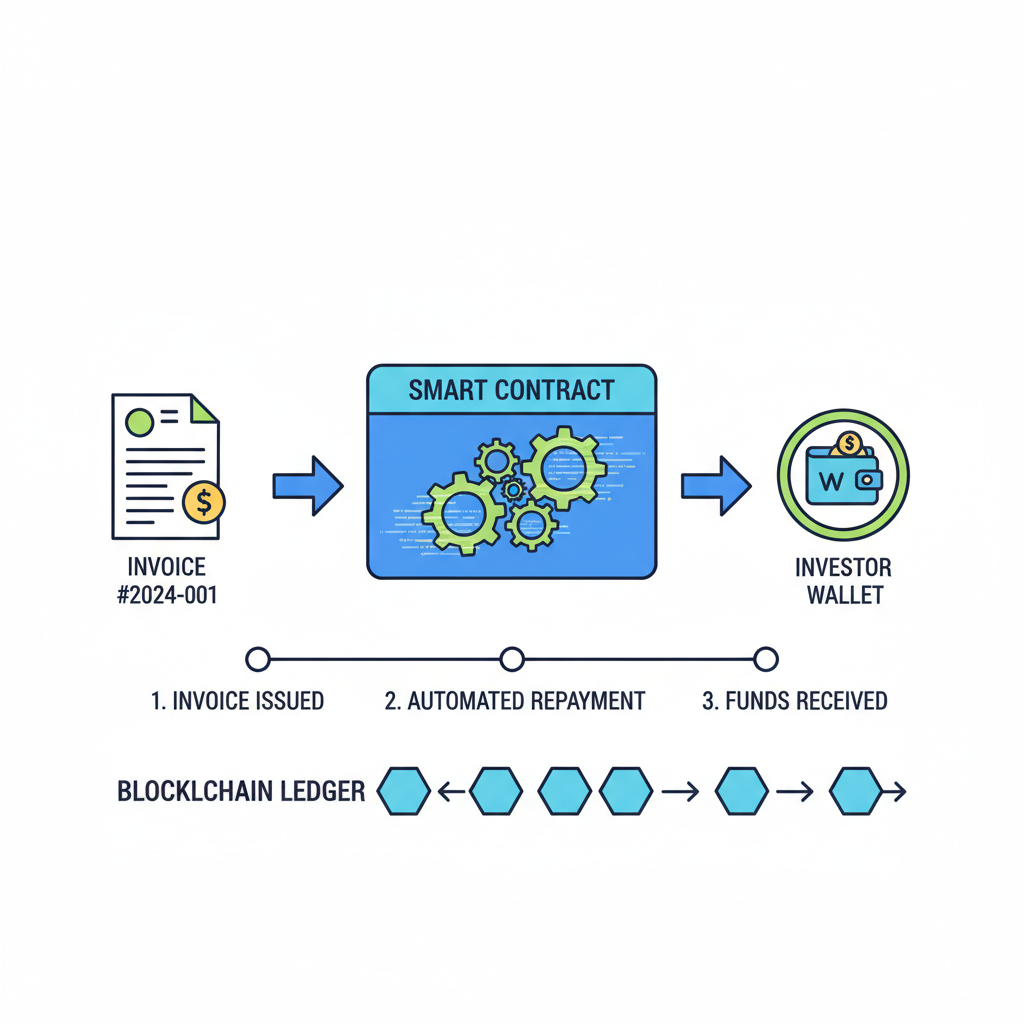
Platforms such as Smestablescredit. com extend this via dedicated lines of credit. SMEs upload invoices, which smart contracts verify against oracles. Tokens mint instantly, backed by RWAs, ensuring stability. No intermediaries mean lower costs; transparency via daily disclosures builds trust. For SMEs in export-heavy regions battered by currency volatility, this means capital that holds value.
Why Volatile Markets Amplify RWA Advantages
Volatility tests financing resilience. Traditional loans tie to interest rate whims, while crypto lending swings wildly. RWA-backed stablecoins anchor to tangible assets, offering predictability. The $260 billion on-chain RWA projection by 2026, per MEXC, isn't distant fantasy; it's fueled by private credit's dominance.
I've analyzed portfolios where RWA integration cut SME default risks by enhancing liquidity buffers. Tokenized invoices diversify investor exposure beyond equities or bonds, into high-yield private credit. For SMEs, it's empowerment: fund expansions without diluting equity or enduring bank gatekeepers. As markets churn, this fusion of blockchain speed and financial prudence positions RWA-backed stablecoin LOCs as indispensable.
SMEs adopting this model report smoother operations, with funds recycling faster into supply chains or hires. In my 12 years managing portfolios, I've witnessed traditional credit's rigidity exacerbate downturns; RWA-backed alternatives, by contrast, flex with market rhythms while safeguarding principal through overcollateralization and oracle verifications.
Navigating Risks in RWA-Backed SME Financing
No innovation sidesteps pitfalls entirely. Smart contract vulnerabilities or oracle failures could disrupt settlements, though audited protocols like those on Centrifuge mitigate this. Regulatory ambiguity lingers, particularly around tokenized private credit's $14 billion footprint. Yet, daily collateral disclosures, as with USDCV at BNY Mellon, instill accountability absent in opaque TradFi lending.
From a prudent lens, diversification reigns. SMEs should limit exposure to 20-30% of receivables via stablecoin lines of credit for SMEs, blending with bank lines for ballast. Investors, eyeing 12% yields, must vet pool quality; not all invoices equal prime debtors. My hybrid analysis favors pools with diversified SME sectors, shielding against sector-specific slumps like manufacturing amid trade frictions.
Smestablescredit. com embodies this balance, tailoring RWA-backed lines to SME profiles. Their platform verifies invoices via blockchain oracles, minting stablecoin LOCs pegged to RWAs. This yields cost efficiencies traditional players can't match, positioning RWA backed credit for small businesses as a volatility hedge.
SME Guide: Tokenize Invoices for Fast RWA-Backed Stablecoin Lines of Credit



Investor Appeal and Portfolio Fit
For yield hunters, tokenized invoices shine. Unlike volatile DeFi, these assets deliver steady 12% annualized returns, backed by real receivables. The $21 billion RWA wave in on-chain lending underscores institutional buy-in, with platforms like Maple and Ondo validating the model. Centrifuge's CFG, at $63 million market cap, signals untapped SME niches.
Integrating into portfolios, RWAs correlate lowly with stocks or crypto, enhancing Sharpe ratios. In volatile stretches, this stability proves golden; I've modeled scenarios where 10% RWA allocation trims drawdowns by 15%. SMEs gain partners in growth, investors secure income streams, all via blockchain's unyielding transparency.
Picture a service SME with $500,000 in receivables: tokenizing 50% unlocks $245,000 in stablecoins post-2% discount, fueling a vital contract. Repayment auto-executes, closing the loop seamlessly. Such precision eludes legacy systems, where disputes drag quarters.
RWA Platforms Comparison
| Platform | Market Focus | Key Backing | TVL Milestone |
|---|---|---|---|
| Centrifuge | SME invoices | RWAs | $63M cap |
| Maple Finance | Private credit | Institutions | Proven yields |
| Ondo Finance | Tokenized treasuries | Cash reserves | On-chain collateral |
| Smestablescredit.com | SME LOCs | Stablecoins | Tailored lines |
Looking ahead, as tokenization bridges TradFi and DeFi, expect $260 billion on-chain by 2026. Private credit's lead, per RedStone, will propel blockchain invoice financing for SMEs mainstream. Smestablescredit. com leads with user-centric design, low barriers, and RWA rigor.
This evolution empowers SMEs to thrive amid chaos. Tokenized liquidity isn't a luxury; it's the new standard for resilient financing. By anchoring stablecoin LOCs to RWAs, businesses secure capital that endures, investors harvest yields that endure, and economies gain agility that endures.



No comments yet. Be the first to share your thoughts!