
The 2026 SME credit gap
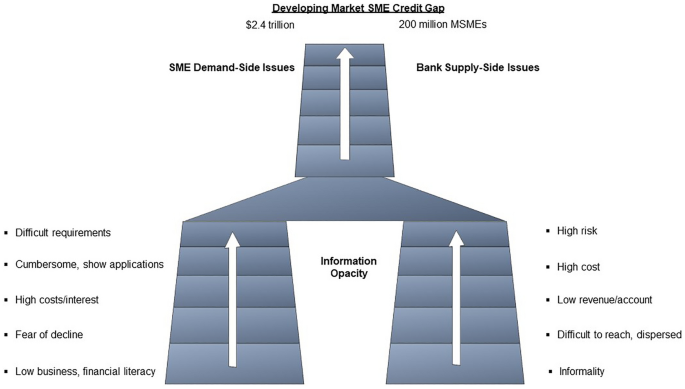
Small and medium-sized enterprises are facing a financing cliff. Despite lower interest rates in many developed markets, access to growth capital has tightened rather than eased. The World Bank estimates a US$5.7 trillion finance gap across 119 emerging and developing economies, a shortfall that stifles job creation and innovation at scale. Even in mature markets, traditional bank lending remains restrictive, with many SMEs finding it difficult to secure loans without heavy collateral or personal guarantees.
The reliance on personal guarantees is becoming a bottleneck for founders who want to separate personal assets from business risk. Banks, still recovering from pandemic-era loan defaults, are applying stricter underwriting standards. This creates a paradox: businesses that need capital to grow are often denied because they lack the historical financial depth that legacy algorithms require. The result is a widening gap between the capital available and the capital needed for modern SME growth.
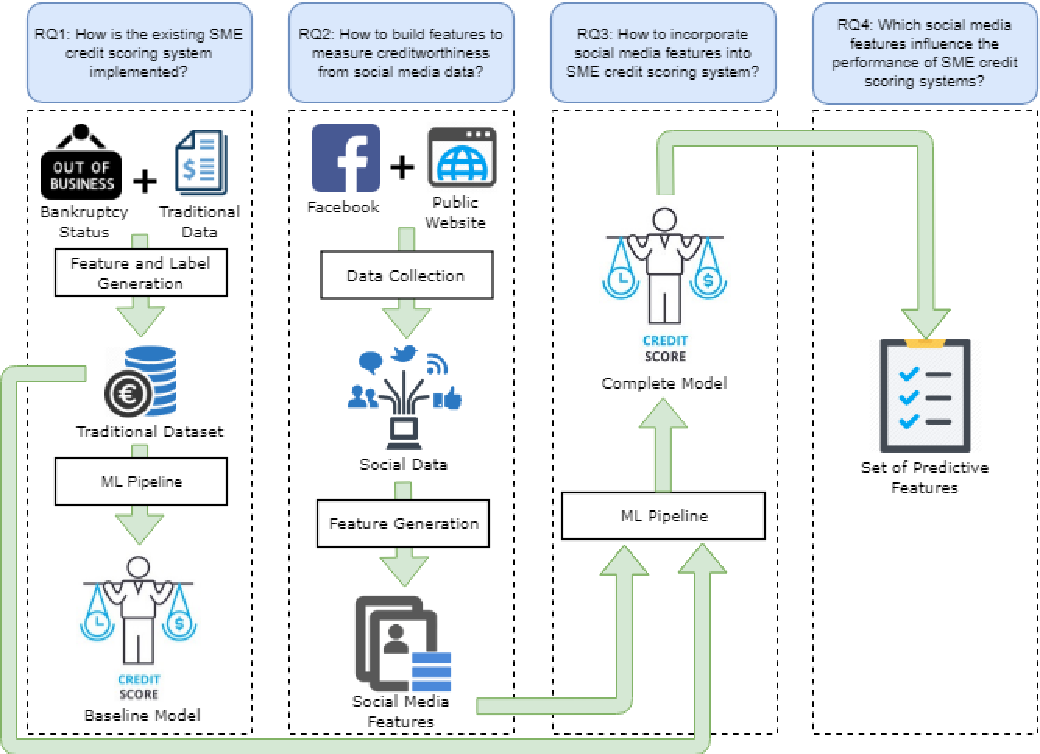
This environment is pushing SMEs toward alternative lending models. AI-driven underwriting and revenue-based financing are beginning to fill the void left by traditional banks. These new tools assess cash flow and real-time data rather than just credit history, making credit more accessible for younger companies. For entrepreneurs, understanding this shift is critical to securing the working capital needed to survive and thrive in 2026.
How AI scoring replaces personal guarantees
For decades, SME credit relied on a binary choice: provide personal assets as collateral or get rejected. This model punished fast-growing companies with limited real estate or inventory. Today, AI scoring replaces personal guarantees by treating cash flow as the primary asset. Lenders no longer ask what you own; they ask how you move money.
The shift from static assets to dynamic cash flow
Traditional underwriting looks backward at balance sheets. AI-driven underwriting looks forward at transaction velocity. Platforms like HES LoanBox and Mambu analyze real-time payment streams from accounting software and banking APIs. They measure the consistency of incoming revenue against outgoing obligations. This data creates a dynamic risk profile that updates daily, not annually. A business with thin equity but strong, predictable sales now has a viable path to capital.
Replacing pledges with behavioral signals
When personal guarantees are removed, the burden of proof shifts to behavioral signals. AI models evaluate thousands of data points: invoice payment cycles, seasonal revenue dips, and customer concentration risk. For example, a retailer with high inventory turnover but low cash reserves might be flagged as high-risk by a traditional banker, but viewed as a strong borrower by an AI that recognizes the inventory turnover as a sign of healthy demand. The machine learns that the business model itself is the collateral.
Real-world application: HES LoanBox and Mambu
Leading platforms demonstrate this shift. HES LoanBox automates the verification of financial health, allowing lenders to approve lines of credit based on verified transaction history rather than personal asset pledges. Similarly, Mambu provides the core banking infrastructure that enables these AI models to scale, processing the complex data streams required for alternative scoring. These tools allow SMEs to access working capital without putting their homes or personal savings on the line.
"Managing SME credit risk has become a daily topic of discussion among CEOs, CROs, and CFOs..." — SME Finance Forum
This approach democratizes access to capital. It allows businesses to grow based on their operational merit rather than their personal wealth. As AI models refine their ability to predict cash flow, the personal guarantee will likely become a relic of the past, reserved only for the most volatile or high-risk ventures.
RWA-backed stablecoin lines of credit
Real world asset (RWA) backed stablecoins represent a structural shift in SME credit, moving liquidity from opaque balance sheets to transparent, on-chain collateral. By tokenizing tangible assets like invoices, inventory, or real estate, these platforms allow small businesses to access working capital without the friction of traditional banking. The result is a line of credit that settles in minutes rather than weeks, governed by code rather than credit committees.
This model fundamentally changes the collateral requirement. In conventional banking, the "personal guarantee" is often the only thing standing between a business and a denied loan. RWA-backed lines replace this with on-chain proof of asset ownership. When the underlying asset—say, a verified invoice from a blue-chip buyer—is tokenized, it becomes the sole collateral. This removes the need for the business owner to pledge personal assets, significantly lowering the barrier to entry for early-stage companies.
The speed advantage is equally critical. Traditional SME loans require months of underwriting, document submission, and manual verification. RWA platforms automate this through smart contracts that instantly verify the tokenized asset's existence and value. Once the asset is locked in a vault, the stablecoin liquidity is released immediately. This immediacy allows SMEs to seize opportunities or cover payroll gaps without the lag time that often kills momentum.
To understand how this new liquidity source compares to legacy options, consider the operational differences in speed, collateral, and guarantee requirements.
| Lender Type | Settlement Speed | Primary Collateral | Personal Guarantee |
|---|---|---|---|
| Traditional Bank | 1-4 weeks | Mixed (Assets + Credit Score) | Required |
| AI Fintech | 24-72 hours | Cash Flow Data | Often Required |
| RWA Stablecoin | Minutes | Tokenized Real-World Assets | None |
Top AI lending platforms for SMEs
The shift toward AI lending platforms for SMEs has changed how small businesses access capital. Instead of waiting weeks for traditional underwriting, these platforms use alternative data to approve credit lines in days or even hours. This speed is critical for businesses that need working capital to manage inventory or cash flow gaps.
HES LoanBox is a leading example of this technology. It uses AI-driven underwriting to assess creditworthiness based on real-time business data rather than just historical credit scores. This allows for faster decision-making and more flexible loan structures tailored to the specific needs of SMEs.
Mambu offers a cloud-native core banking system that powers many of these digital lending experiences. By providing a scalable infrastructure, Mambu enables fintechs to launch and manage SME credit products quickly. Its modular design allows lenders to customize the customer journey, from application to disbursement, ensuring a smooth experience for business owners.
QUALCO Loan Manager focuses on streamlining the loan origination process. It integrates AI to automate data collection and verification, reducing the administrative burden on both lenders and borrowers. This efficiency helps lower the cost of lending, making credit more accessible for smaller enterprises.
American Express Business Blueprint provides a digital platform that helps SMEs manage their financial operations. While not a direct lender, its tools integrate with various lending partners to offer tailored credit solutions. The platform uses data analytics to help businesses understand their spending patterns and optimize their financial health, making them better candidates for AI-backed credit lines.



As an Amazon Associate, we may earn from qualifying purchases.
Steps to qualify for AI-driven credit
Lenders now use AI and real-world asset (RWA) data to underwrite SME credit faster than traditional methods. To qualify for these lines of credit, you need to prepare specific digital and financial records. Follow this workflow to align your business with AI lending criteria.
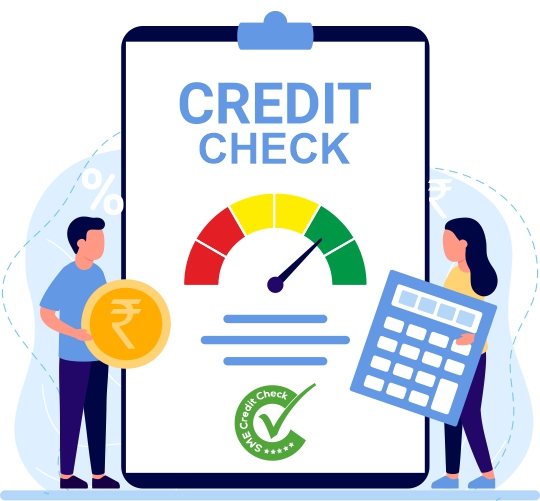
AI lenders prioritize real-time transaction data over static balance sheets. Gather 12 to 24 months of sales records from your primary channels, such as Shopify, Amazon, or Stripe. Ensure these records are exportable as clean CSV or PDF files, as algorithms parse structured data more accurately than scanned documents.
Link your business bank account to the lender’s secure portal or upload recent bank statements. Lenders use AI to analyze cash flow velocity and recurring expenses. Having two years of tax returns ready is also essential, as it serves as the primary verification for your reported revenue and legal business status.
If applying for an RWA-backed line of credit, you must identify and value the assets securing the loan. This could include inventory, equipment, or accounts receivable. Provide clear titles, serial numbers, and current market valuations. Lenders use this data to determine your borrowing capacity and risk profile.
Complete the digital identity verification process. This typically involves uploading a government-issued ID and proof of business registration. AI systems perform instant checks against fraud databases. Ensure all names and addresses match exactly across your ID, tax returns, and bank accounts to avoid automated rejections.
Common questions about SME credit
SME credit is financing tailored for small and medium-sized enterprises to fund working capital, inventory, or equipment. Qualifying typically requires two years in business and proof of repayment ability. In 2026, lenders increasingly weigh digital adoption and real-world asset (RWA) backing alongside traditional metrics.
No comments yet. Be the first to share your thoughts!