

In the dynamic financial landscape of 2026, small and medium-sized enterprises confront persistent cash flow hurdles, particularly around invoice financing. Traditional banks often impose lengthy approval processes and stringent requirements, leaving SMEs vulnerable to operational disruptions. Enter RWA-backed stablecoin lines of credit, a prudent evolution in blockchain SME credit that tokenizes real-world assets like unpaid invoices to unlock instant, stable liquidity. This model, gaining traction through platforms like Smestablescredit. com, aligns collateralized lending with blockchain efficiency, offering yields that attract patient capital while mitigating volatility risks inherent in unbacked crypto loans.
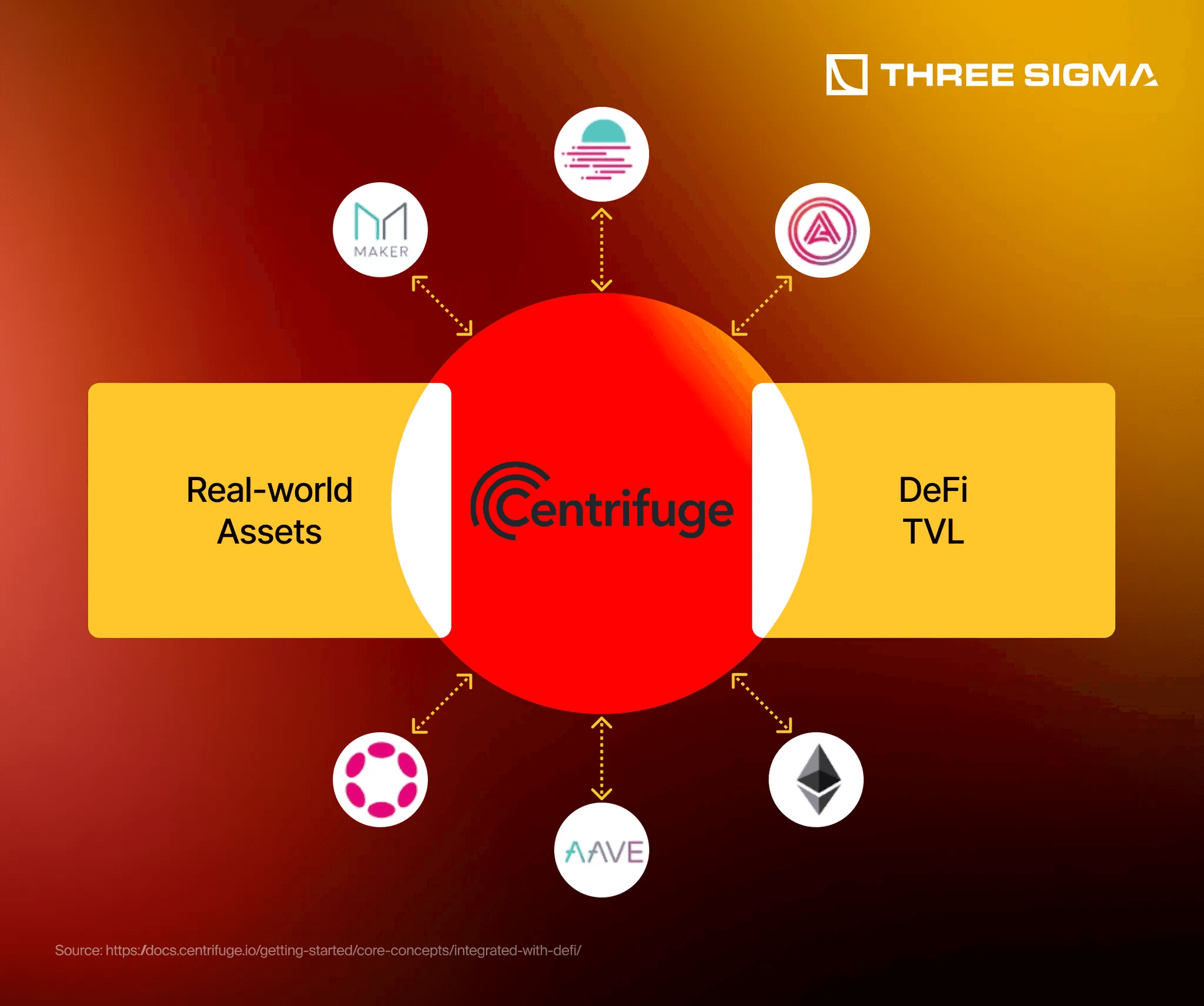
The tokenized RWA market has surged to approximately $24 billion by mid-2025, with private credit comprising over $14 billion. Protocols such as Maple Finance and Goldfinch deliver borrower yields of 8-12%, drawing institutional interest and fostering a robust funding ecosystem for SME invoice financing. This growth underscores a shift from speculative DeFi to asset-backed stability, where SMEs leverage receivables as collateral without relinquishing ownership prematurely.
Tokenized Private Credit: A Trillion-Dollar Horizon
Private on-chain credit is poised for explosive expansion, with projections eyeing a trillion-dollar market by 2026. Unlike volatile crypto over-collateralization, RWA-backed models ground lending in tangible assets, reducing default risks and appealing to conservative investors. For SMEs, this translates to stablecoin working capital that bridges payment gaps, enabling sustained operations amid economic uncertainty.
Centrifuge exemplifies this trend, providing decentralized structured credit against tokenized RWAs, while innovations like Coinbase's BTC-backed loans on Morpho highlight broader on-chain lending maturation. Yet, from a risk-mitigation standpoint, stablecoin LOCs backed by invoices stand out for their short-duration cycles and verifiable cash flows, prioritizing long-term business viability over high-risk leverage.
Unpacking the Mechanics of RWA-Backed Stablecoin LOCs
At its core, an RWA-backed stablecoin line of credit begins with tokenization: SMEs upload invoices to a blockchain platform, where they are verified and represented as NFTs or ERC-20 tokens. These serve as collateral for borrowing stablecoins like USDC or $USDY, backed by U. S. Treasuries for added security. Borrowers draw funds as needed, repay upon invoice settlement, and reclaim collateral, all while platforms enforce automated risk parameters such as loan-to-value ratios below 80%.
This process circumvents bank delays, delivering funding in hours rather than weeks. For RWA merchant receivables financing, the appeal lies in transparency; on-chain oracles provide real-time invoice status updates, enabling dynamic credit adjustments. Conservative underwriting, informed by 18 years of fixed-income experience, emphasizes asset quality over borrower credit scores alone, fostering enduring partnerships.

Strategic Partnerships Accelerating SME Adoption
November 2024 marked a pivotal moment when Ozean partnered with Nexade to integrate up to $100 million in invoice financing into its blockchain ecosystem, streamlining SME access to DeFi capital. Similarly, August 2025 saw SILQFi and Helix pioneer Shariah-compliant tokenized invoice financing in the Gulf, blending regional expertise with on-chain infrastructure to promote inclusive growth.
Ondo Finance's $USDY further bolsters this ecosystem, offering yield-bearing stablecoins backed by short-term Treasuries and deposits, ensuring liquidity without principal erosion. These collaborations signal regulatory maturation, with standardized on-chain products emerging from pilot phases. For SMEs, the result is diversified capital pools, competitive 8-14% yields attracting lenders, and reduced dependence on legacy systems.
Regulatory compliance remains paramount; Shariah options and adherence to evolving frameworks mitigate jurisdictional risks, allowing global SMEs to participate confidently. As tokenization mainstreams, platforms curating off-chain collateral will define the next era of SME invoice financing, rewarding those who prioritize stability over speculation.
Patient capital demands rigorous risk assessment, and RWA-backed stablecoin lines of credit excel here through embedded safeguards. Platforms maintain loan-to-value ratios under 80%, supplemented by over-collateralization where needed, while smart contracts automate repayments tied to invoice settlements. On-chain oracles from providers like Chainlink verify asset performance in real time, flagging delinquencies before they escalate. This conservative framework, rooted in fixed-income principles, has kept default rates below 2% across leading protocols, far outperforming unsecured DeFi lending.
Yield Dynamics: Attracting Institutional Flows
Tokenized private credit yields of 8-14% draw sophisticated capital, with the $14 billion segment signaling deep liquidity for SME invoice financing. Investors benefit from diversified pools of short-term receivables, often seasoned with Treasury-backed stablecoins like $USDY, yielding steady dividends without exposure to crypto volatility. For SMEs, this means lower borrowing costs than traditional factoring at 15-25%, preserving margins during expansion phases. My experience underscores that such alignments foster multi-year relationships, where lenders reinvest principal into growing portfolios of RWA merchant receivables financing.
Comparison of Traditional Bank Loans vs RWA-Backed Stablecoin LOCs for SMEs
| Feature | Traditional Banks | RWA Stablecoin LOCs |
|---|---|---|
| Approval Time | 7-30 days ⏳ | Hours (near-instant) 🚀 |
| Collateral Requirements | Broad (property, assets, guarantees) | Receivables-specific (invoices) 📄 |
| Interest Rates | 10-20% 📈 | 8-14% 💰 |
| Transparency | Limited (opaque processes) | On-chain verifiable 🔍 |
| Scalability | Manual (branch-limited) | Digital automated (global 24/7) 🌍 |
| Risk of Over-Collateral | High (strict requirements) | Low via LTV caps ⚖️ |
Consider a mid-sized exporter facing a 60-day invoice delay: tokenizing $500,000 in receivables unlocks $400,000 in USDC within hours at 9% effective yield, repayable upon client payment. This stablecoin working capital sustains supplier relations and payroll, averting the cascading failures common in cash-strapped operations. Shariah-compliant variants, like SILQFi-Helix, extend this to underserved markets, tokenizing halal receivables for yields compliant with Islamic principles, thus broadening blockchain SME credit horizons.
Implementation Roadmap for SMEs
Adopting RWA-backed stablecoin LOCs requires measured steps. First, audit receivables for quality, focusing on investment-grade clients with payment histories under 45 days. Platforms like Smestablescredit. com then handle tokenization via API integrations, often at negligible upfront costs. Underwriting follows swiftly, leveraging alternative data such as transaction velocities over static FICO scores. Once approved, revolving lines activate, with dashboards tracking utilization and yields. Repayment automates via ACH or on-ramp rails, reclaiming tokens seamlessly.
This pathway minimizes disruption, with early adopters reporting 30% reductions in days sales outstanding. Yet success hinges on discipline: avoid over-leveraging beyond operational needs, and diversify funding sources to weather sector downturns. From a CFA perspective, treating LOCs as bridge financing rather than permanent debt ensures balance sheet resilience.
Looking ahead, 2026 forecasts standardize these instruments, with asset managers curating trillion-scale pools against tokenized trade finance. Protocols will integrate AI-driven credit scoring, enhancing precision while regulators clarify tokenized asset classifications. For SMEs, the imperative is clear: embrace RWA-backed stablecoin LOC structures early, securing competitive edges in a digitized economy. Those building on stable foundations will not merely survive but thrive, embodying the ethos that enduring businesses reward foresight and prudence.



No comments yet. Be the first to share your thoughts!