

Tokenized Real-World Assets Enabling Stable Low-Cost SME Growth Funding 2026

In the evolving landscape of 2026, tokenized real-world assets (RWAs) stand as a cornerstone for tokenized RWA SME funding, offering small and medium-sized enterprises unprecedented access to stable, low-cost capital. Platforms like Smestablescredit. com exemplify this shift by providing RWA-backed stablecoin lines of credit, which sidestep the volatility of traditional crypto markets and the delays of conventional banking. This fusion of blockchain efficiency with tangible asset backing ensures SMEs can secure stablecoin growth loans SMEs 2026 demand, fostering sustainable expansion without excessive risk exposure.

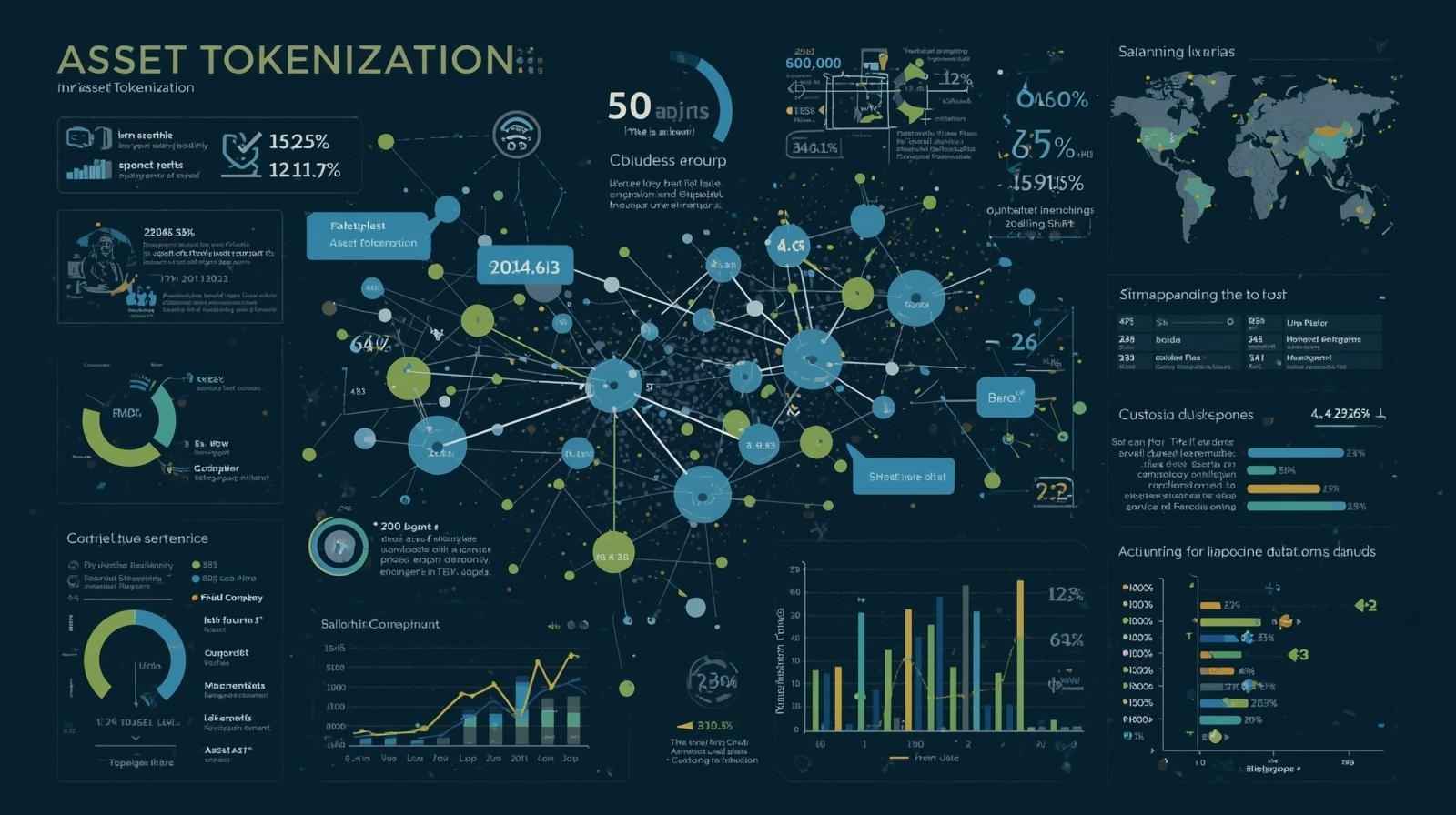
RWA Market Expansion Signals Shift Toward Stable SME Financing
The tokenized RWA sector has surged past $36 billion (excluding stablecoins) by late 2025, with projections pointing to a $400 billion market capitalization by the end of 2026. This growth reflects a broader capital migration from high-volatility assets to reliable instruments like tokenized treasuries and private credit, which deliver predictable cash flows essential for business continuity. Standard Chartered’s forecast of a $2 trillion tokenized RWA market by 2028 underscores the trajectory, yet my conservative lens prioritizes measured adoption over hype. For SMEs, this means low cost RWA credit lines become viable, as fractionalization democratizes investment and unlocks liquidity from illiquid assets such as real estate and receivables.
Institutional heavyweights are accelerating this trend. BlackRock’s BUIDL fund commands $2.83 billion in tokenized assets, dwarfing competitors like Ethena USDt at $1.46 billion and Ondo Finance at $1.39 billion. Securitize dominates with its $2.8 billion tokenized U. S. Treasury offering, capturing over 70% market share. These developments validate RWAs as a risk-mitigated pathway, where SMEs leverage tokenized invoices or equipment for immediate working capital, bypassing months-long bank approvals.
Leading RWA Platforms for SME Financing
-
Securitize: Focuses on tokenized treasuries, managing the largest U.S. Treasury offering at approximately $2.8 billion and holding over 70% market share in tokenized assets.
-
Centrifuge: Specializes in tokenizing receivables for SME financing, enabling efficient on-chain credit markets.
-
Maple: Provides secured loans through tokenized structures, supporting institutional lending to SMEs.
-
Ondo: Offers cash management products with $1.39 billion in tokenized assets, aiding stable SME funding.
-

Goldfinch: Targets emerging markets credit, structuring loans for SMEs in underserved regions.
Tokenization Platforms Reshaping SME Credit Structures
Issuers like Centrifuge, Maple, and Goldfinch specialize in converting senior secured loans, SME financing, and receivables into tokenized formats, enabling seamless on-chain trading. This process, often originating off-chain before tokenization, enhances transparency while preserving legal enforceability. In 2026, tokenized cash-management products lead maturity, closely followed by permissioned private credit, segments tailor-made for SMEs seeking stablecoin growth loans SMEs 2026. Fragmentation across chains persists as a challenge, but cross-chain frameworks like xRWA are bridging gaps, boosting interoperability and liquidity.
Consider the practical implications: an SME with $500,000 in outstanding invoices can tokenize them via Centrifuge, attracting global investors instantly. Yields remain stable, often pegged to short-term treasuries, mitigating interest rate swings that plague uncollateralized loans. Smestablescredit. com builds on this by collateralizing stablecoin lines of credit with RWAs, ensuring over-collateralization ratios that safeguard lenders and borrowers alike. Regulatory progress further bolsters confidence, with frameworks emerging to standardize compliance and investor protections.

Institutional Flows and Technological Maturity Fuel Adoption
Major banks and asset managers are tokenizing debt at scale, with infrastructure now mature and legal models battle-tested. The Canton Network’s state report highlights chain fragmentation but also interoperability solutions gaining traction. For SMEs, this translates to reduced intermediation costs; DeFi integration cuts fees by up to 80% compared to legacy systems, channeling savings into competitive low cost RWA credit lines. BlackRock and Securitize’s dominance signals TradFi’s endorsement, shifting capital toward yield-bearing RWAs over speculative plays.
Yet, prudence dictates caution. While projections dazzle, enduring value lies in patient capital deployment. SMEs must vet platform governance and oracle reliability to avoid smart contract pitfalls. Platforms prioritizing audited code and conservative leverage, much like Smestablescredit. com’s model, will prevail, building resilient growth funding ecosystems.
SMEs stand to gain most from this maturation, as tokenized RWAs lower barriers to tokenized RWA SME funding. Traditional lenders demand extensive collateral and credit histories, often excluding growth-stage firms. In contrast, RWA-backed stablecoin lines fractionalize assets like inventory or machinery, drawing in diverse investors seeking yields above treasuries but below equity risks. Smestablescredit. com’s approach exemplifies this: by anchoring lines of credit to vetted RWAs, it delivers drawdowns in stablecoins within hours, not weeks, at rates hovering 2-4% above SOFR, far below unsecured alternatives.
Quantifying the SME Advantage in Low-Cost Capital
DeFi’s efficiency amplifies these gains. Transaction costs plummet, with on-chain settlements eliminating wire fees and manual reconciliations. A typical SME invoice financing deal, once costing 5-10% in fees and delays, now incurs under 1% via platforms like Maple or Centrifuge. This compression directly boosts margins, enabling reinvestment in operations. My 18 years in fixed income affirm: stability trumps speculation. Tokenized private credit, yielding 6-9% with RWA over-collateralization, mirrors senior tranches in securitizations, offering downside protection absent in volatile DeFi primitives.
| Platform | Focus | AUM (2026) | SME Suitability |
|---|---|---|---|
| Securitize | Tokenized Treasuries | $2.8B | High – Stable yields |
| Centrifuge | Receivables Financing | $1B and | Excellent – Invoice tokenization |
| Ondo Finance | Cash Management | $1.39B | Good – Liquidity pools |
| Maple Finance | Secured Loans | $500M and | High – SME credit pools |
| Goldfinch | Emerging Markets Credit | $300M and | Moderate – Higher yields, risk |
This table illustrates platform diversity, each contributing to low cost RWA credit lines. Securitize’s treasury dominance provides the bedrock, while specialists like Centrifuge target SME pain points directly. Yet, selection demands diligence; assess total value locked (TVL), audit frequency, and recovery mechanisms before committing.
Risks warrant equal scrutiny. Chain fragmentation, noted in The Canton Network’s report, risks liquidity silos, though xRWA protocols promise remedies. Oracle failures or collateral devaluation could trigger liquidations, underscoring the need for conservative loan-to-value ratios below 70%. Regulatory evolution, while supportive, introduces compliance burdens; SMEs unprepared for KYC enhancements may falter. Smestablescredit. com mitigates these by embedding TradFi-grade underwriting into blockchain rails, blending the best of both worlds.
Projections for RWA-Driven SME Expansion
By late 2026, expect tokenized RWAs to underpin $100 billion in SME lending, per extrapolated trends from $36 billion baselines. Institutional inflows, led by BlackRock’s $2.83 billion BUIDL, signal sustained momentum toward Standard Chartered’s $30 trillion long-term vision. For stablecoin-linked tokens powering these ecosystems, price stability remains paramount, but select RWA natives may appreciate with adoption.
Ondo Finance (ONDO) Price Prediction 2027-2032
Conservative estimates based on RWA TVL growth, market projections to $400B by 2026, and tokenized SME funding trends
| Year | Minimum Price (USD) | Average Price (USD) | Maximum Price (USD) | Avg YoY % Change |
|---|---|---|---|---|
| 2027 | $2.00 | $3.50 | $5.50 | +40% |
| 2028 | $2.80 | $5.00 | $9.00 | +43% |
| 2029 | $3.80 | $7.00 | $13.00 | +40% |
| 2030 | $5.00 | $10.00 | $18.00 | +43% |
| 2031 | $6.50 | $13.50 | $24.00 | +35% |
| 2022 | $8.00 | $18.00 | $32.00 | +33% |
Price Prediction Summary
ONDO is primed for growth amid RWA tokenization surge, with conservative projections showing average prices climbing from $3.50 in 2027 to $18 by 2032, driven by TVL expansion, institutional adoption (e.g., $1.39B TVL), and SME financing efficiencies. Min/max reflect bearish regulatory hurdles vs. bullish adoption scenarios.
Key Factors Affecting Ondo Finance Price
- RWA market expansion to $400B in 2026 and $2T by 2028
- Ondo Finance’s leading TVL at $1.39B with BlackRock/Securitize momentum
- Stable SME growth funding via asset fractionalization and DeFi integration
- Regulatory clarity and cross-chain advancements boosting liquidity
- Market cycles, competition from CFG/MPL, and volatility as key risks
Disclaimer: Cryptocurrency price predictions are speculative and based on current market analysis.
Actual prices may vary significantly due to market volatility, regulatory changes, and other factors.
Always do your own research before making investment decisions.
These forecasts assume measured growth, aligning with my belief in patient capital. SMEs adopting early will capture compounding advantages: faster scaling, resilient balance sheets, and investor access unbound by geography. Platforms like Smestablescredit. com, with their RWA-stablecoin nexus, position businesses to thrive amid this shift, turning tokenized assets from novelty to necessity. Enduring enterprises, after all, build on foundations of stability, not fleeting surges.